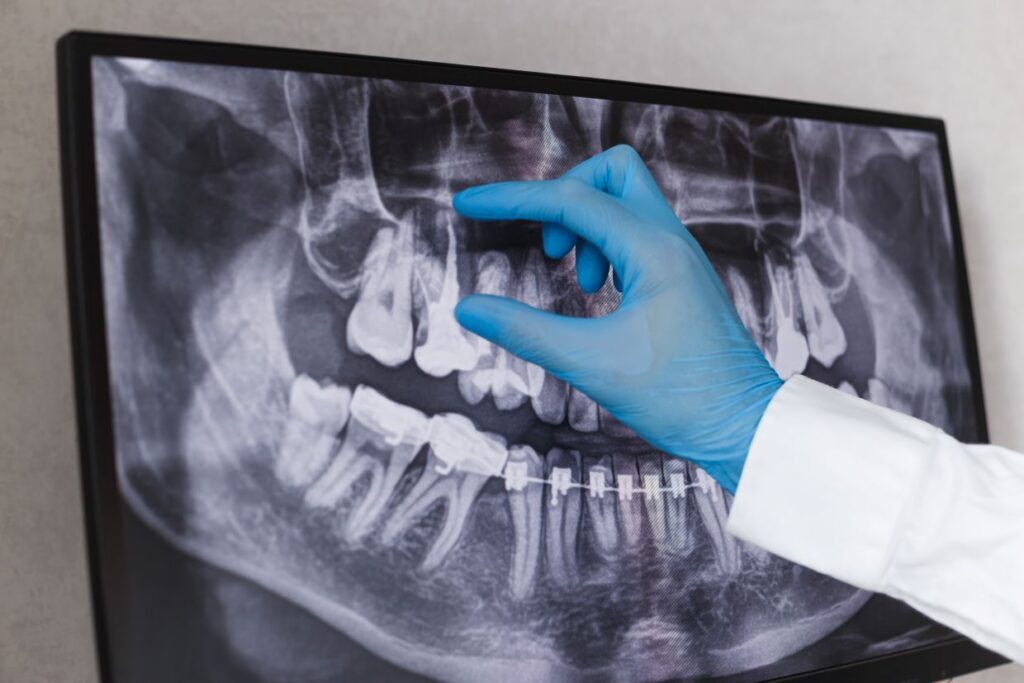
What a Root Canal Actually Does
Inside every tooth, beneath the hard enamel and the layer of dentin underneath it, is a soft inner chamber called the pulp. The pulp contains nerves, blood vessels, and connective tissue that helped the tooth develop. Once a tooth is fully mature, that pulp is no longer essential to its function.
When bacteria reach the pulp through a deep cavity, a crack, or a traumatic injury, the tissue becomes infected and inflamed. That infection is what causes the severe, often throbbing pain that sends people to the dentist in the first place. Left untreated, the infection does not stay contained. It spreads to the surrounding bone, can cause a painful abscess, and eventually threatens neighboring teeth.
A root canal removes the infected pulp, cleans and disinfects the inner canals of the tooth, and seals everything off so the infection cannot return. The tooth is saved. The pain is gone. And the surrounding teeth and bone are protected from the damage that an untreated infection would cause over time.
Signs You May Need a Root Canal
Not every toothache means a root canal is necessary, but certain symptoms are strong indicators that the pulp of a tooth has been compromised. If you are experiencing any of the following, do not wait it out. Call us and come in.
Severe or Throbbing Tooth Pain
Pain that is intense, persistent, or pulses on its own without any pressure applied to the tooth is one of the most telling signs that the nerve inside is infected or severely inflamed. This kind of pain does not resolve on its own and typically gets worse the longer treatment is delayed.
Prolonged Sensitivity to Hot or Cold
Most teeth experience some brief sensitivity to temperature. When that sensitivity lingers for more than a few seconds after the hot or cold source is removed, it often indicates that the pulp tissue is inflamed or dying. Patients frequently describe it as a sensitivity that used to come and go but has gradually become more persistent and intense over time.
Swelling or Tenderness in the Gums
Swelling around a specific tooth, tenderness when pressing on the gum tissue nearby, or a small raised bump on the gum that looks almost like a pimple are all signs of infection that has moved beyond the tooth itself. That bump, called a dental abscess or fistula, is the infection finding a way to drain. It is not something to ignore.
A Cracked Tooth With Nerve Involvement
A crack that extends deep enough into the tooth to reach the pulp creates a pathway for bacteria to enter the inner chamber. This type of crack may not be visible to the naked eye and may not cause obvious pain initially, but over time it almost always leads to pulp infection if it is not identified and treated. Dr. Carson evaluates cracked teeth carefully during every exam precisely because catching this early makes a significant difference in the complexity of treatment required.
Root Canals Are Performed In-House by Dr. Carson
One of the things patients tell us they appreciate most about having their root canal at DTX Dental Studio is that they do not have to go anywhere else. No referral to an unfamiliar specialist. No starting over with a new office, new staff, and a dentist who does not know their history. Just Dr. Carson, in the same office they already feel comfortable in, handling the procedure from start to finish.
Dr. Carson performs root canals with a steady, patient-focused approach that prioritizes your comfort throughout. He takes the time to make sure the anesthesia is fully effective before anything begins, explains each step as he goes, and checks in with you consistently throughout the procedure so you always know what is happening.
What Happens During a Root Canal at DTX Dental Studio
Step One: Anesthesia
Local anesthesia is administered to the tooth and surrounding tissue. Dr. Carson ensures the area is completely numb before proceeding. You should not feel pain during the procedure. Pressure and movement are normal sensations but discomfort is not, and if you feel anything that concerns you, you are always welcome to raise your hand and Dr. Carson will stop immediately.
Step Two: Accessing the Pulp
A small opening is made through the top of the tooth to access the inner pulp chamber. This is the same general approach used for a filling, just directed toward the center of the tooth rather than the outer surface.
Step Three: Removing the Infected Tissue
The infected or inflamed pulp tissue is carefully removed from the pulp chamber and the root canals that extend down through the roots of the tooth. The canals are then shaped and cleaned thoroughly to remove all traces of bacteria and debris.
Step Four: Disinfecting and Sealing
The cleaned canals are disinfected and filled with a biocompatible material called gutta-percha, which seals the space completely and prevents reinfection. The access opening in the tooth is then sealed with a temporary or permanent filling.
Step Five: Crown Placement
Because a tooth that has undergone a root canal loses much of its internal structure and becomes significantly more brittle, a crown is placed over the tooth following treatment. The crown protects the remaining tooth walls from fracturing under the pressure of normal biting and chewing and restores the tooth to full function and appearance. Skipping the crown is one of the most common reasons root canal treated teeth eventually crack and are lost, so we consider it an essential part of the complete treatment.
Recovery: Back to Normal Faster Than You Expect
Most patients are back to their regular routine within a day or two of a root canal. Some mild soreness or tenderness in the area for the first few days is normal as the surrounding tissue settles, and over-the-counter pain relievers are typically sufficient to manage any post-procedure discomfort.
The significant pain that brought you in, the throbbing, the sensitivity, the pressure, is almost always gone immediately after the procedure once the source of the infection has been removed. Patients frequently tell us that the relief they feel after a root canal is one of the most immediate improvements they have experienced from any dental treatment.
Frequently Asked Questions About Root Canals
Do root canals hurt?
The procedure itself should not be painful. Local anesthesia ensures the area is numb throughout, and Dr. Carson takes extra care to confirm the anesthesia is fully effective before beginning. What most patients feel is pressure and movement, not pain. The discomfort that tends to follow in the days after is typically mild and manageable with standard over-the-counter medication.
How long does a root canal take?
Most root canals at DTX Dental Studio are completed in a single appointment lasting approximately 60 to 90 minutes depending on the complexity of the tooth’s root anatomy. Molars with multiple canals may take longer than front teeth, which tend to have simpler root structures.
How will I know if I need a root canal or just a filling?
The key difference is whether the infection or damage has reached the pulp. A filling addresses decay or damage that is limited to the outer layers of the tooth. If the decay or a crack has extended into the pulp chamber, a root canal is necessary to address the infection at its source. Dr. Carson will determine this through a thorough clinical exam and will explain his findings and recommendation clearly before any treatment is planned.
What happens if I do not get a root canal?
An infected tooth does not heal on its own. The infection will continue to spread, the pain will intensify, and eventually the tooth may need to be extracted. The infection can also spread to surrounding bone and tissue, creating a more serious health situation that goes beyond the tooth itself. Treating it promptly is always the better outcome.
Is a root canal covered by insurance?
Root canal treatment is typically covered at least partially by most PPO dental insurance plans. Coverage varies by plan and by which tooth is being treated. Our team verifies your benefits before your appointment so you know exactly what to expect financially before the procedure begins.
We Accept Most PPO Insurance Plans
Root canal treatment is one of the more commonly covered restorative procedures and our team handles the insurance verification process before your appointment so there are no financial surprises on top of an already stressful situation. Have questions about your specific coverage? Call us at (214) 340-2111 and we will look into it for you right away.
In Pain Right Now? Call Us.
A dental infection is not something to manage with pain relievers and hope. If you are experiencing significant tooth pain, swelling, or any of the symptoms described on this page, call DTX Dental Studio at (214) 340-2111. We see urgent cases and will make every effort to get you in the same day so you are not sitting in pain longer than necessary.
We serve patients from Lake Highlands, Vickery Meadow, Lochwood, Old Lake Highlands, Hamilton Park, Richardson Heights, University Estates, and across Dallas who need prompt, trustworthy care when something goes wrong. Our doors are open Monday through Thursday from 7:30am to 4:30pm.
Serving Dallas Patients Since 2002
DTX Dental Studio is located at 9090 Skillman St #283 in Dallas, TX 75243. For over two decades we have been the practice Dallas families count on for honest, skilled care, including the procedures that make people nervous. If a root canal is what your tooth needs, we will make sure the experience is as straightforward and comfortable as it can possibly be.
Do Not Wait Until It Gets Worse
Dental infections do not improve on their own and every day of delay makes the situation more complicated. Call us or request an urgent appointment online. Dr. Carson will take a thorough look, explain exactly what he finds, and get you on the path to relief as quickly as possible.
Located at 9090 Skillman St #283, Dallas, TX 75243
Phone: (214) 340-2111
Monday through Thursday: 7:30am to 4:30pm